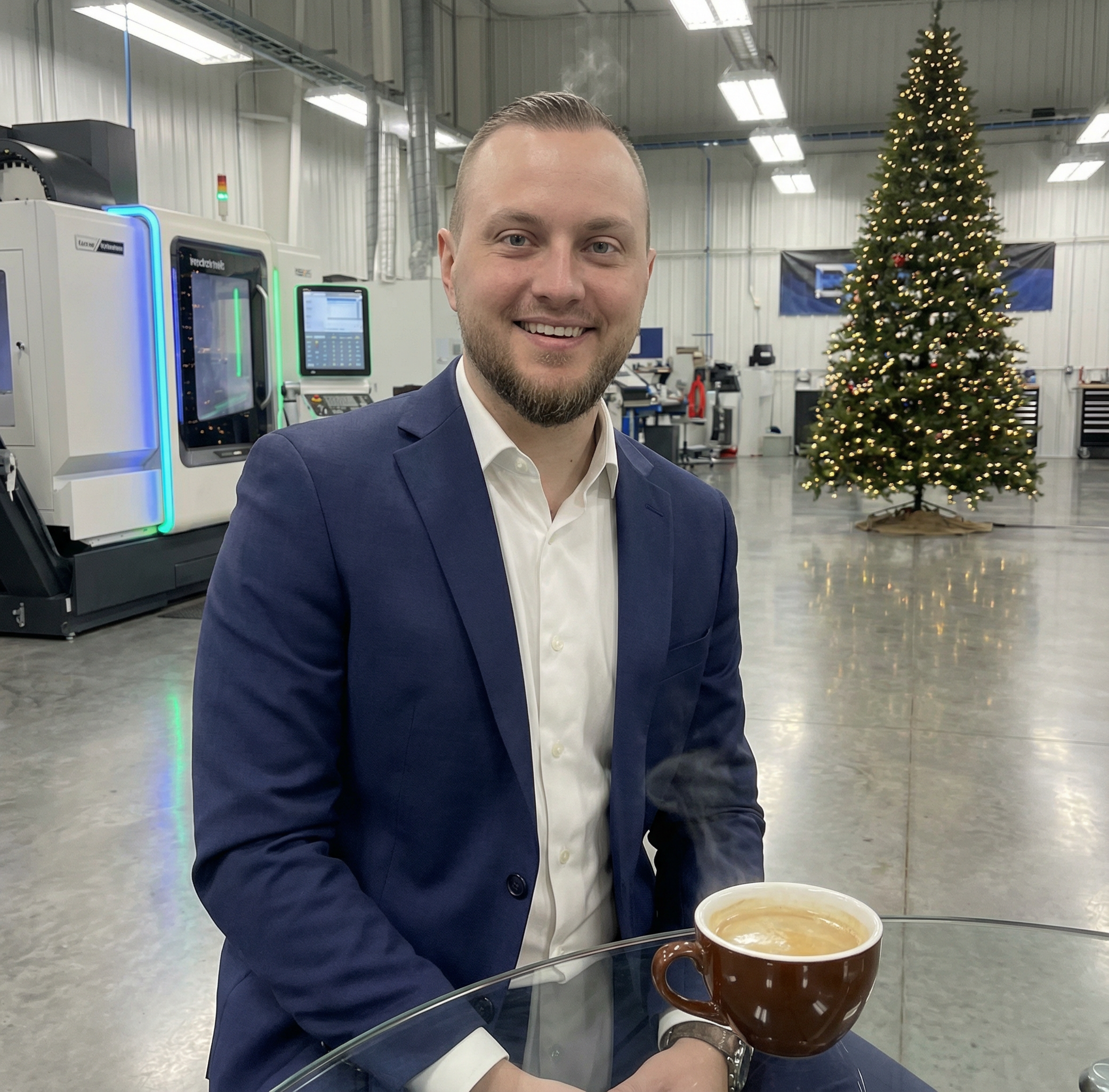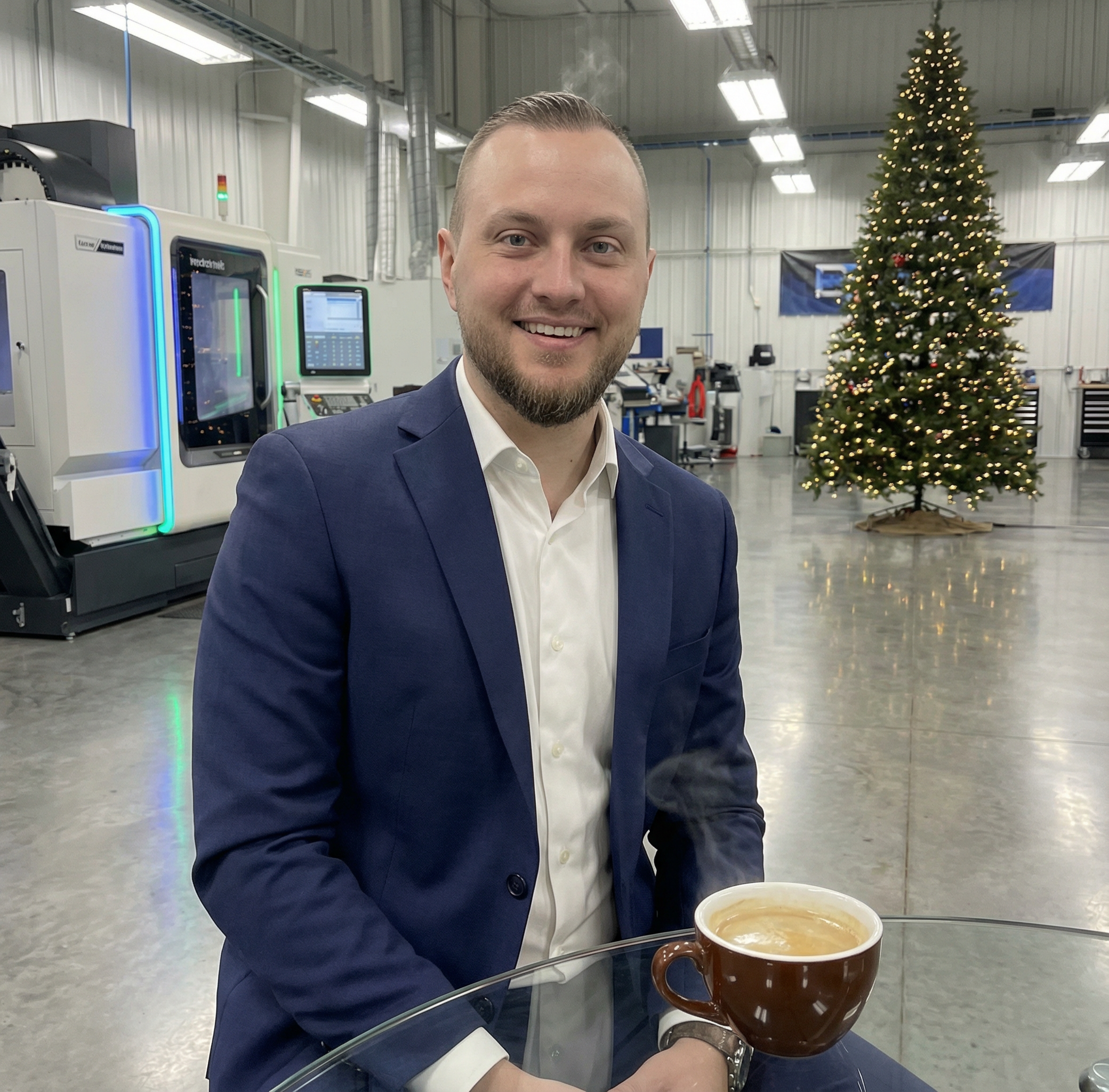
There is a moment, just before Christmas, when even the loudest CNC shop floor seems to fall quiet. Machines complete their last cycle, toolpaths pause, and for a brief second all that remains is the hum of the lights and the breathing of people who have given this year everything they had.
This post is for them — and for you, if you lead them. It is for every machinist who stayed late to rescue a delayed job, every inspector who caught a defect before it reached the customer, every supervisor who carried the weight of targets, quality and people on the same set of tired shoulders.
As we stand at the threshold of a new year, I want to ask one question:
How can we make next year the year where production becomes more precise, scrap becomes rarer – and people become genuinely happier?
Not in theory. In reality. On your shop floor.
⚙️ Efficiency Is Not About Running Faster — It’s About Thinking Smarter
In many CNC shops, “efficiency” is still confused with “speed”:
- Run more jobs.
- Change tools faster.
- Push people harder.
But true efficiency in 2026 and beyond is not about shouting “faster!” It is about designing a system where:
- scrap is prevented upstream, not sorted downstream;
- setup is predictable, not improvisational;
- information is clear, not tribal;
- people feel safe to speak, not afraid to be blamed.
A truly efficient CNC machine shop:
- delivers first‑time‑right quality,
- protects margin and reputation,
- and still sends machinists home with energy left for their families.
Key idea: Efficiency is not about running faster. It is about thinking smarter and building a system that supports disciplined, repeatable excellence.
🧬 Scrap: A Symptom, Not an Enemy
Scrap hurts. It hurts your numbers, your delivery promises, your mood – and it hurts the pride of good machinists more than any KPI ever could.
But scrap is not the enemy. Scrap is a message from your process:
- “Your work instructions are unclear.”
- “Your programme assumes a perfect world.”
- “Your tooling strategy does not match the real material behaviour.”
- “Your training is not as strong as you believe.”
Next year, instead of shouting at the symptom, we can:
-
Treat every scrap incident as a structured learning event
- Capture: Which part, which operation, which machine, which shift, which setup condition?
- Ask: What exactly did the machinist see, hear, feel before it went wrong?
- Fix: What standard, checklist or training needs to change so this cannot repeat?
-
Move from blame to curiosity
- “Who did this?” creates silence.
- “What in our system made this possible?” creates improvement.
-
Respect the emotional side
Somewhere between the rejected part and the red number in the ERP system, there is a human being who is quietly asking:
“Am I good enough?”
Strong leadership answers:
“Yes. And together we’ll make the process as good as you are.”
🧑🏭 Machinists Are Not Resources — They Are Engineers of Reality
We can buy new 5‑axis centres, robots, MES systems, AI scheduling. We cannot buy trust, loyalty or pride.
Your machinists:
- listen to the spindle when the programme looks fine but something “feels wrong”;
- smell coolant and know when something is starting to go off;
- feel the vibration that your report will only show next week.
They are engineers of reality, translating drawings and tolerances into physical truth.
In the coming year, if we want better quality and less scrap, we must give them more than PPE and instructions. We must give them:
-
A voice that matters
- Regular, structured debriefs: “What slowed you down? Where did you save us today? What frustrated you?”
- A simple rule: if three machinists complain about the same thing, it is no longer a complaint. It is a project.
-
Clarity that protects
- Clear priorities: which job truly matters now, and why?
- Clear standards: what does “good” look like — and what does “stop and call” look like?
-
Fairness that heals
- No “heroes” who break processes and are rewarded for chaos.
- No quiet, reliable people whose discipline is taken for granted.
Key truth: A CNC shop where people feel respected will always outperform one where people feel replaceable.
🌱 Wellbeing as a Quality Strategy, Not a Perk
When machinists are exhausted, anxious or constantly firefighting:
- concentration drops,
- mistakes increase,
- and small problems turn into big non‑conformances.
Wellbeing is not about posters and fruit bowls. It is about how the work is designed.
In the new year, imagine this instead:
- shifts start with two minutes of calm clarity, not ten minutes of panic;
- each cell has visual standards that reduce mental load instead of adding it;
- rotas and overtime respect that machinists are human beings with bodies and families, not endless capacity.
The paradox is simple and beautiful:
When you seriously protect the wellbeing of your people, they will fiercely protect the wellbeing of your quality.
🎯 A Practical Vision for 2026: Quality Up, Scrap Down, People Proud
Here is the future I want to build with you — as a CNC Machine Shop Supervisor, as a partner, as a human being who has spent years between code, metal and people:
-
Lower scrap through intelligent standards
- Robust setup checklists that machinists help design.
- First‑piece approval that is fast, not bureaucratic.
- Clear visual confirmation of critical features before full run.
-
Higher efficiency through flow, not pressure
- Tools, fixtures and programmes ready before the job hits the machine.
- Less heroism, more reliability.
- KPIs that reward stability, not chaos.
-
Happier machinists through honest leadership
- Leaders who say: “I don’t know, but I will find out.”
- Feedback that is specific, not vague praise or silent disappointment.
- A culture where raising a problem is seen as an act of courage, not disloyalty.
If we do this well, your shop floor in twelve months will feel different:
- fewer emergency meetings;
- more calm, controlled setups;
- more quiet smiles at the end of the shift;
- more customers who stay — not because we are cheap, but because we are reliable, precise and human.
🤝 My Commitment to You
I am not writing this from an office tower far away from the noise. I write this as someone who has:
- run production under brutal deadlines,
- rebuilt processes after painful failures,
- and stood next to machinists at 2 a.m., watching a critical part finish and knowing: “If this one is wrong, we all pay for it.”
My promise for the next year is simple:
I will continue to help CNC machine shops become places where precision is standard, scrap is rare, and people are genuinely proud to work.
Not just technically. Humanly.
If this resonates with you — whether you are a machinist, a supervisor, an engineering manager or a director — I invite you to explore more of my journey, my approach and my work.