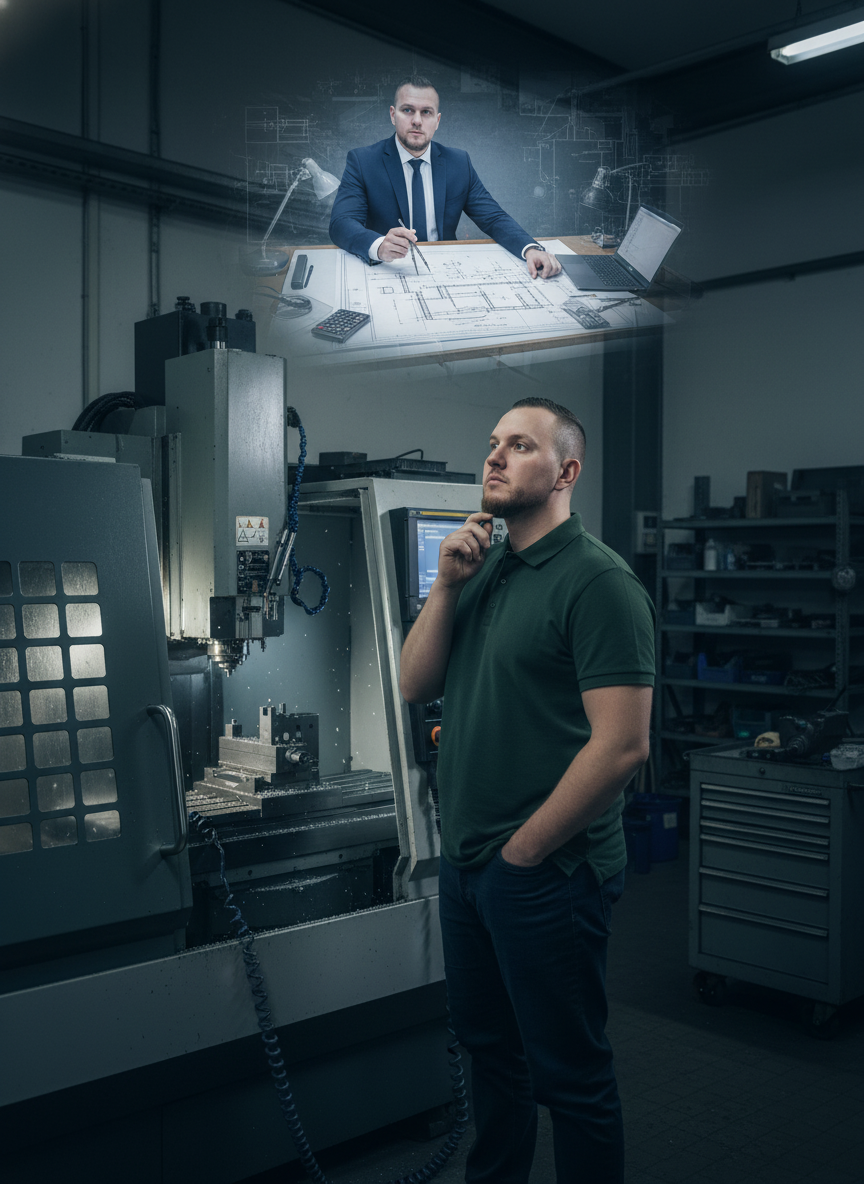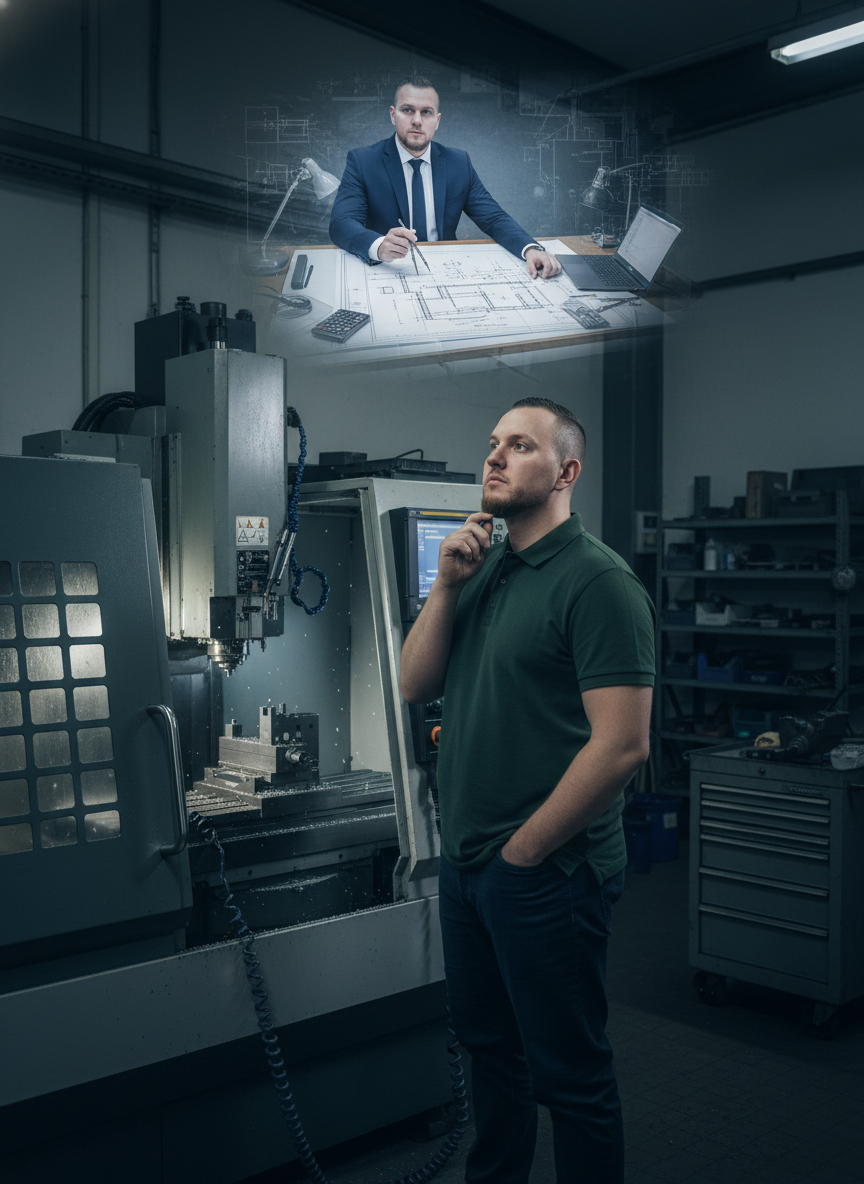
In manufacturing, true transformation begins not with machines, but with minds. A perfectly calibrated spindle means little if the team that runs it feels undervalued, uninspired, or unheard. Precision, in its purest form, is not mechanical — it is mental discipline, translated into metal through skilled hands.
That is why my ultimate goal is not only to build a high-performance CNC shop, but to create an environment where machinists evolve into engineers of thought — professionals who understand the “why,” not just the “how.”
Precision Leadership: Turning Machinists into Engineers of Thought
🧠 1. Cognitive Empowerment on the Shop Floor
Too often, machinists are boxed into routine — execute, report, repeat. But what if we trained them to think like process engineers?
Imagine weekly analytical sessions where the team dissects a scrap trend or a setup deviation, using root-cause analysis, data interpretation, and creative problem-solving. Not as an audit — but as a lab of ideas.
Every operator becomes a contributor to system design, not merely an executor of it. This mental elevation multiplies engagement — because when people understand cause and effect, their ownership of quality becomes instinctive.
📘 2. The “Engineering Mindset” Programme
If I were to formalise this vision, I would launch an internal training initiative — The Engineering Mindset. It would combine three core modules:
- 🔍 Analytical Thinking — how to question processes, measure variation, and see waste before it happens.
- ⚙️ Design Literacy — understanding geometry, tolerances, and manufacturability from a holistic view.
- 🧩 Systemic Awareness — grasping how one operation affects the next, from raw stock to final inspection.
Each machinist would be encouraged to present one improvement project per quarter — fostering both technical depth and presentation confidence.
This is how we bridge the gap between “shop floor” and “engineering office.”
🌱 3. The Human Equation: Precision with Purpose
Leadership is not about control — it is about amplifying potential.
When we replace intimidation with mentorship, supervision with guidance, and pressure with clarity — the entire culture transforms.
A self-thinking team does not need constant oversight. It needs direction, trust, and the freedom to excel.
I want to see machinists who not only run parts to spec but who can explain why that tolerance matters — professionals who find meaning in mastery, not monotony.
🌍 Final Thought
If I were asked by senior leadership what I want to build, my answer would be simple: a CNC department where intelligence and precision are one and the same.
Because when craftsmanship and consciousness unite, excellence stops being a target — it becomes a natural state of being.
💬 My Question to You:
How do you nurture the intellectual growth of your machinists?
Do you train for compliance — or for curiosity?