Every CNC workshop talks about continuous improvement. But in reality, improvement often fades behind production targets, urgent jobs, or lack of time.
The key is to make improvement visible, practical, and part of the daily routine — not a separate initiative. Here are several tools and techniques that help transform that philosophy into action.
⚙️ Practical Tools for Daily Improvement in CNC Workshops
Turning Continuous Improvement into Daily Reality
🧭 1. Visual Management Boards
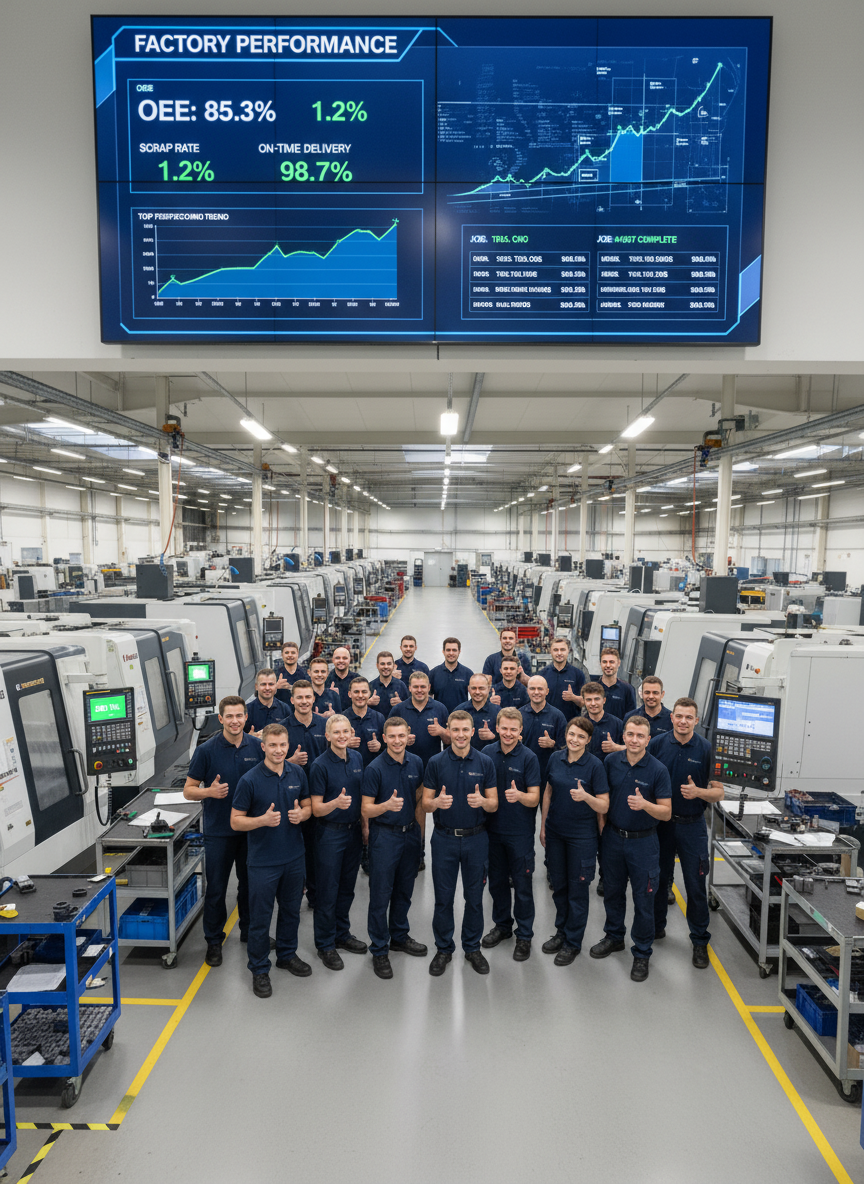
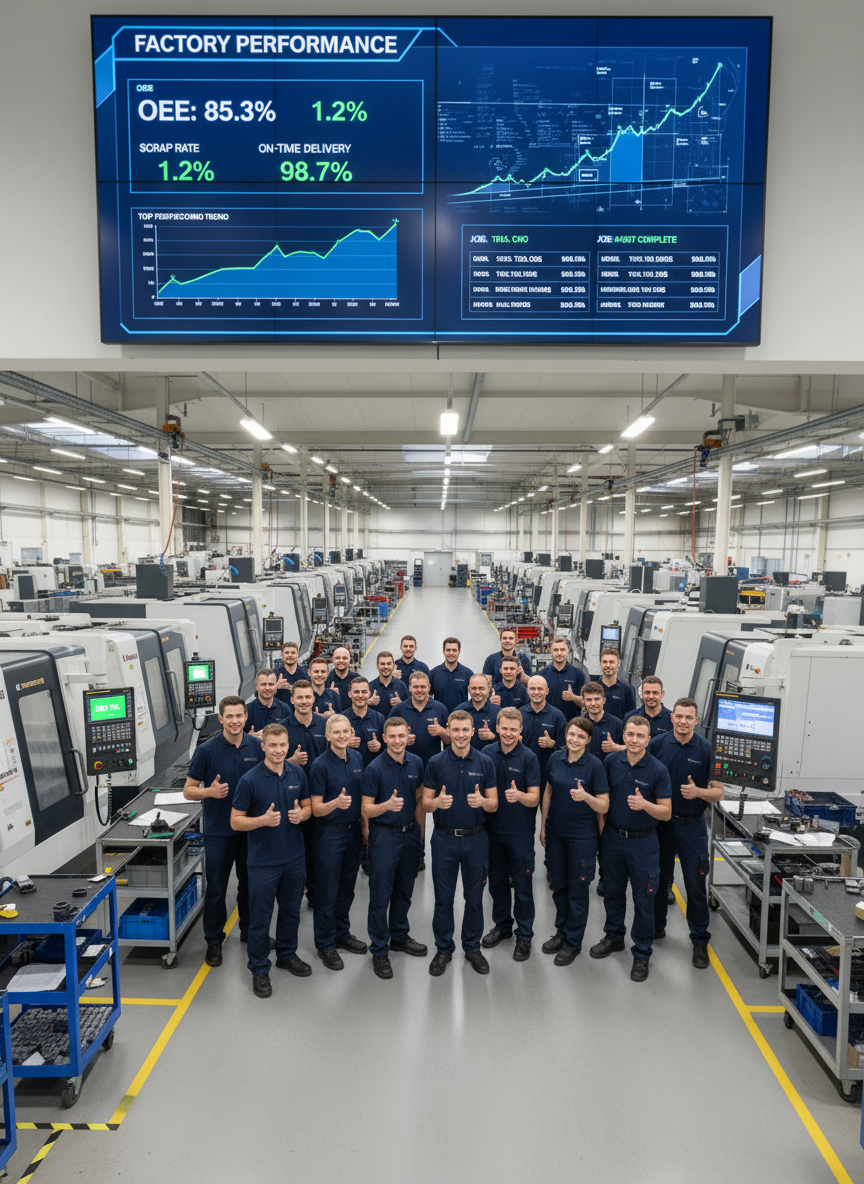
Visibility drives responsibility. A well-designed performance board near every cell can show:
- 📊 OEE and scrap trends updated each shift.
- ⚠️ Top three ongoing issues.
- 🎯 Daily goals for throughput or setup time.
These boards turn data into dialogue. Instead of waiting for meetings, teams discuss progress directly on the shop floor — short, focused, and transparent.
Result: everyone sees what matters and feels ownership for outcomes.
🧰 2. Standard Work & Quick Reference Guides
In a busy CNC environment, consistency prevents chaos. Digital setup sheets, QR-coded tool lists, and brief visual instructions at each workstation minimise confusion and variation.
Even simple interactive PDFs with images of fixture orientation, tool numbers, or torque settings save hours of uncertainty. Operators gain autonomy, and supervisors gain stability.
Result: faster setups, fewer mistakes, smoother handovers between shifts.
🔁 3. Five-Minute Reflections (SMED Moments)
After every setup or changeover, take just five minutes for reflection:
- What went well?
- What slowed us down?
- What can be done externally next time?
This mini-analysis often reveals simple but powerful improvements — repositioning a trolley, pre-staging tools, or adjusting offsets more logically.
Result: continuous learning becomes a natural part of production rhythm.
📈 4. Real-Time Feedback Dashboards
Connecting machines to a basic MES or IoT dashboard does not require a massive budget. You can start small — with real-time visualisation of cycle time, downtime, and scrap.
When operators can see performance instantly, they react faster and feel part of the system, not separate from it. True motivation comes from clarity, not pressure.
Result: reduced downtime, data-driven decisions, stronger engagement.
🤝 5. The Empowerment Loop
The final — and most important — tool is not digital. It is human.
Every suggestion, however small, deserves attention. If an operator’s idea is implemented, show it publicly — a note on the board, a short thank-you during the morning meeting.
Recognition builds culture. Culture builds momentum. And momentum sustains improvement.
🌟 In the end, tools are only as effective as the people who use them. When operators understand the why, improvement becomes instinctive.
💬 Question:
What practical tools or habits have helped you sustain improvement in your workshop?
Do you prefer digital dashboards or traditional visual boards — and why?