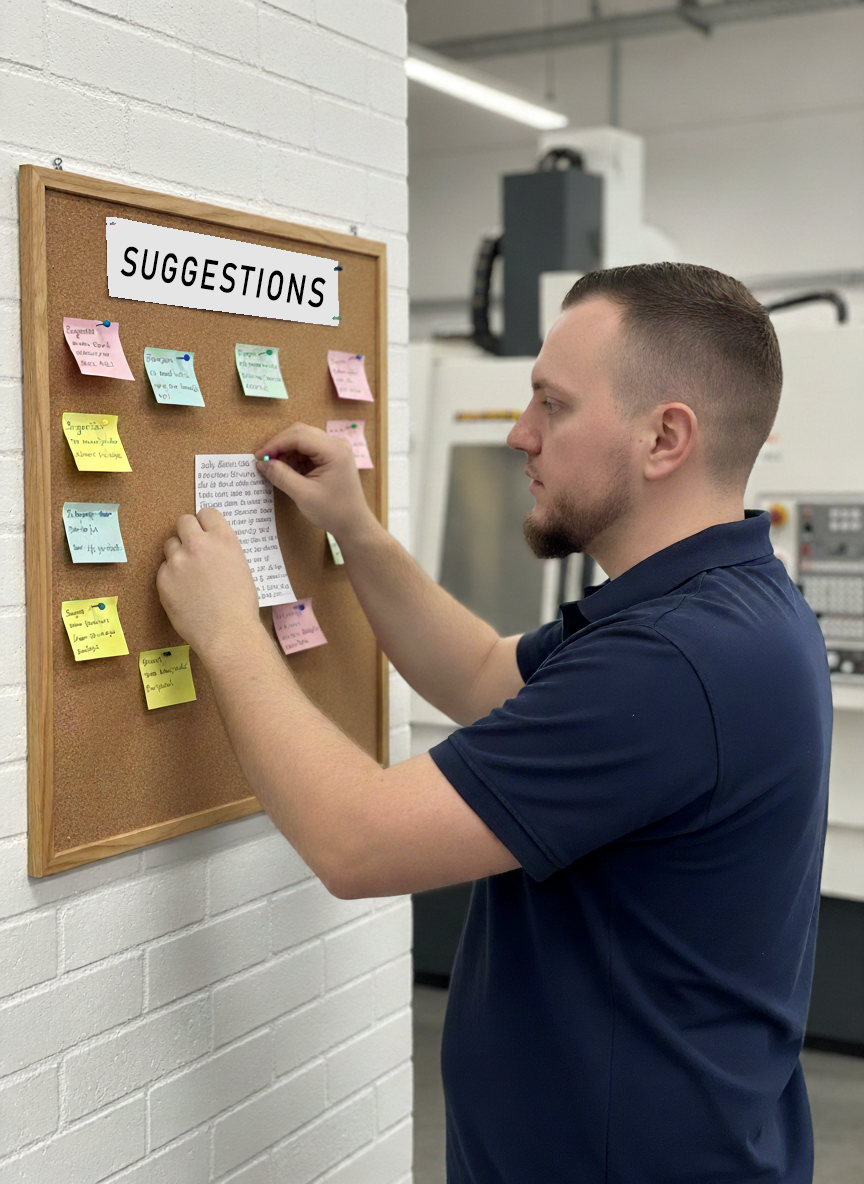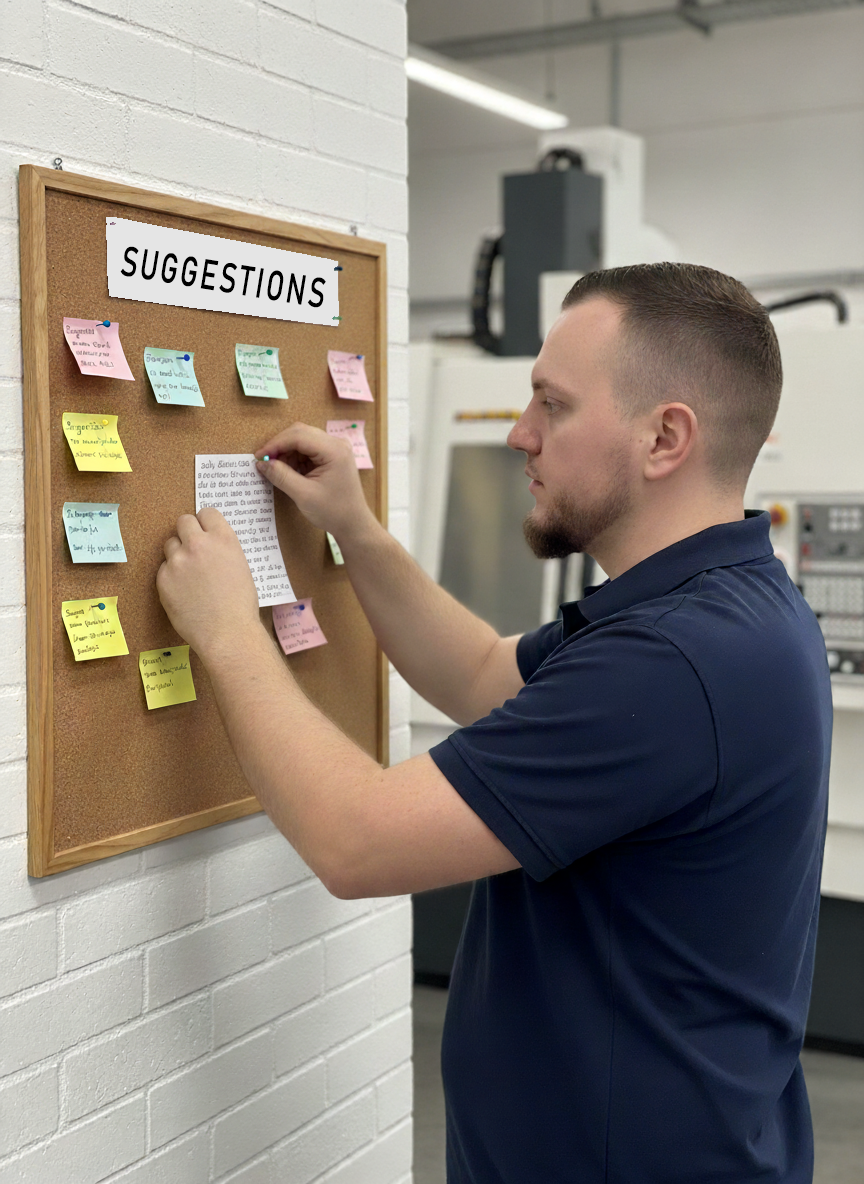
Imagine this: one day, a new manager steps in, gathers the team, and asks machinists to share ideas on how to improve the performance of the machine shop.
On the notice board, people post a variety of suggestions. But today, I want to share one of mine — a proposal that reflects both technical precision and strategic management thinking.
🔹 Let’s Talk About Real Suggestions
🧭 5. Creation of a Machinist’s Measurement Manual: “HTM – How to Measure”
One of the most overlooked yet vital aspects of machining is consistent and accurate measurement. Even the slightest deviation in gauging a part can lead to quality issues, rework, or scrap — all of which cost time, materials, and trust.
That is why I propose creating a comprehensive machinist’s measurement manual — a structured set of instructions, methods, and tips for measuring components, features, and elements with precision.
📘 What it includes
- Step-by-step guidance on how to measure different part geometries.
- Practical tips and tricks from experienced machinists for achieving consistent results.
- Clear, visual examples for OGP and manual measurements.
- Real-life examples of best practice — for instance, an illustrated instruction for measuring the orientation of gear teeth relative to the central axis, already displayed under protective glass on the Micro Vu.
🧩 How it helps
- Reduces incorrect readings on the OGP.
- Decreases the rate of scrap and rework.
- Increases operator independence and confidence.
- Enables new machinists to quickly understand and apply measurement standards.
Copies of this manual should be readily available at every workstation, serving as a reliable reference for all levels of machinists — from apprentices to senior operators.
💡 Why this matters
By standardising how we measure, we not only ensure product quality but also build a culture of precision, accountability, and shared knowledge.
Consistency in measurement is not a small procedural improvement — it is the foundation of trust between machining, inspection, and quality departments.
✅ What this proposal highlights
- A systemic approach to error reduction and training.
- A management mindset focused on empowering operators with knowledge.
- A technical initiative that strengthens both process control and craftsmanship.
🎯 Expected outcomes
- Lower scrap rate and inspection time.
- Higher reliability and fewer disputes between departments.
- Greater autonomy for machinists and a stronger sense of ownership.
📌 Suggestions like this are not just about documentation — they are about building smarter, more self-sufficient teams who share a common standard of excellence.
Suggestions for Machine Shop Improvement by Oleksandr Velyvchenko
💬 Question:
What type of standard or manual would bring the most value to your workshop right now —
measurement, setup, tooling, or something else?