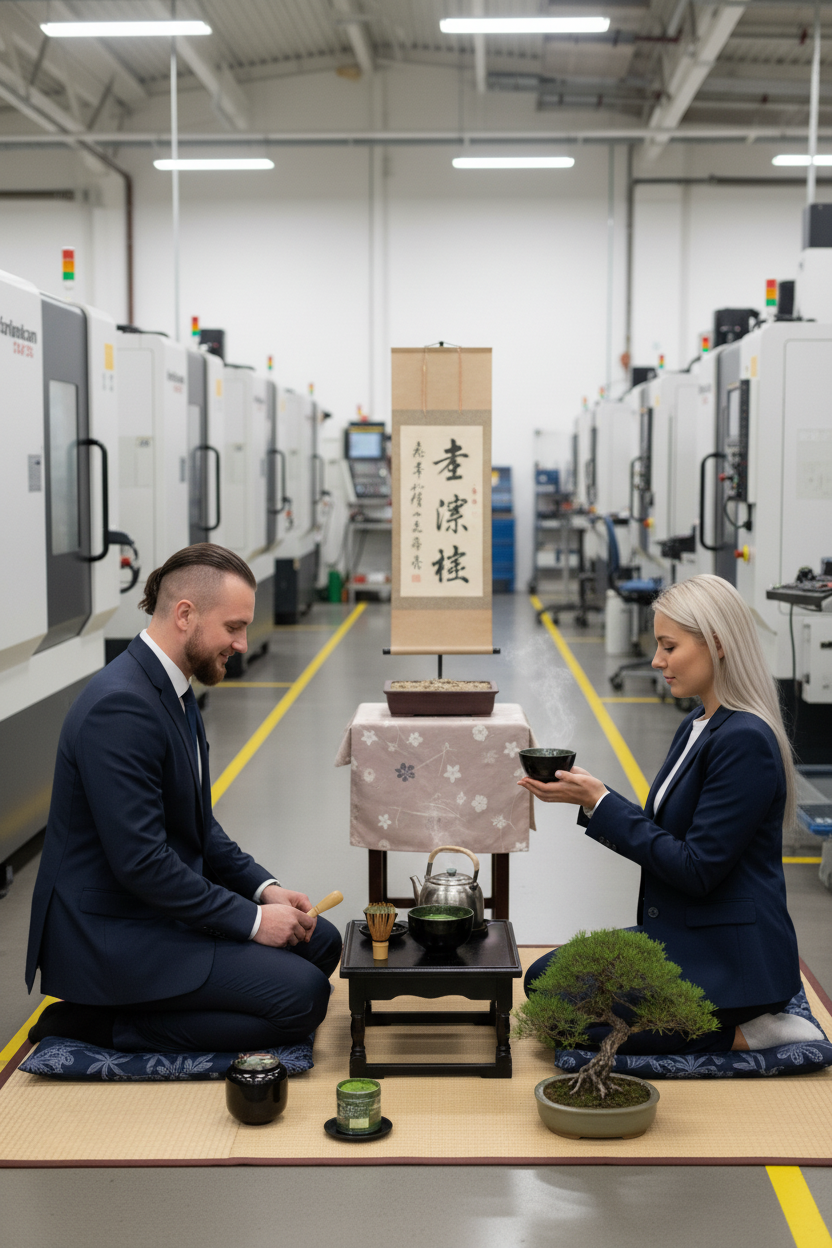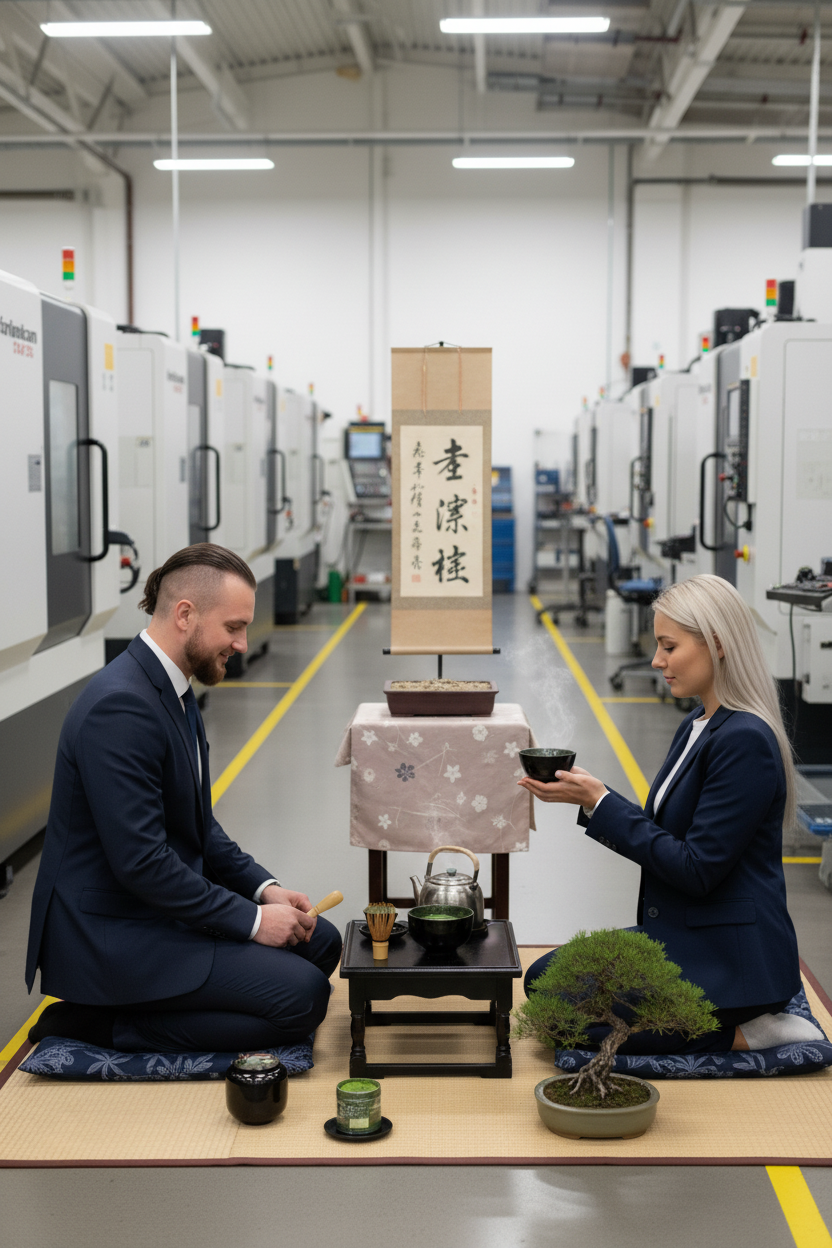
Over the years of working in mechanical production, I’ve come to understand one fundamental truth: no KPI, chart, or report can create lasting results if we manage processes but fail to manage people.
Recently, I studied “Eastern Management” by Professors So Chungwai and Su Dongshui — a remarkable work that bridges modern management theory with millennia of Eastern philosophy. What surprised me most was how well these ancient principles align with the real challenges of our workshops: scrap reduction, productivity, and team discipline.
🧭 Eastern Management: People Before KPIs
In many factories, we try to drive performance with dashboards, KPIs, and reports. But Eastern management reminds us: numbers are only reflections of something deeper — how we see and treat people.
If we manage processes but neglect the human side, improvements will always be temporary. When we manage through people, processes begin to improve naturally.
🌿 1. Putting People First — The Human as a Subject, Not an Instrument
Eastern management sees every employee as a subject of management, not merely a resource. In other words, a machine operator is not just an “executor”, but an owner of the process.
When I embraced this mindset on the shop floor, the level of feedback skyrocketed — and improvement initiatives stopped being formal exercises. Mistakes turned into opportunities for growth instead of reasons for punishment.
Practical insight: “The problem isn’t in the person, but in the process we haven’t taught them to master correctly.”
⚖️ 2. Morality as Priority — Leading Through Moral Authority
In Eastern philosophy, a leader’s strength does not come from command, but from moral authority. A manager who consistently demonstrates professionalism, respect, and integrity has little need for authoritarian pressure — people follow naturally.
This transforms control into mutual trust, and motivation into an inner state of commitment rather than external pressure.
How It Works in Practice
- Openly acknowledge your own mistakes as a leader.
- Systematically train and empower mentors on the shop floor.
- Record and publicly celebrate individual and team achievements.
🤝 3. Leadership Through Service — Creating Conditions for Others
Management grounded in service can be expressed in one simple sentence:
“I create the conditions that allow others to perform at their best.”
This is the philosophy of a leader who does not push from above, but leads from the front — removing obstacles, clarifying standards, and making sure people have the tools, training, and support they need.
When operators feel respected as subjects, when leaders act with moral authority, and when management is understood as service, efficiency stops being a constant struggle — it becomes a natural state of harmony in the workshop.
🌱 From Efficiency to Harmony
For me, Eastern management is not something abstract or “philosophical”. It is a practical lens that changes daily decisions:
- How we react to mistakes.
- How we give feedback and recognition.
- How we balance demands for results with care for people.
When people feel like partners in improvement, not targets of control, scrap goes down, quality goes up, and discipline becomes self‑driven rather than enforced.
👉 If the principle “Putting People First” resonates with you,
which Eastern (or people‑first) ideas do you already apply on your production lines?
How do you turn efficiency from struggle into harmony?