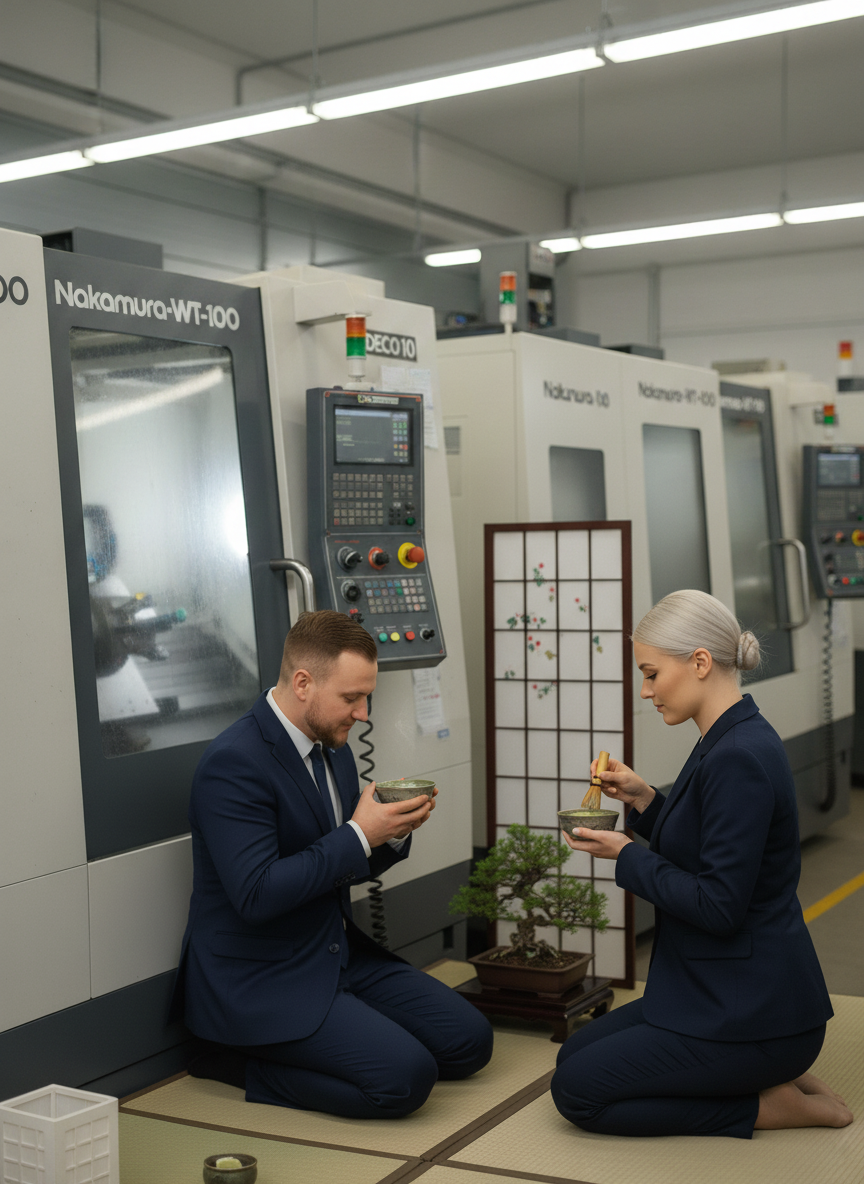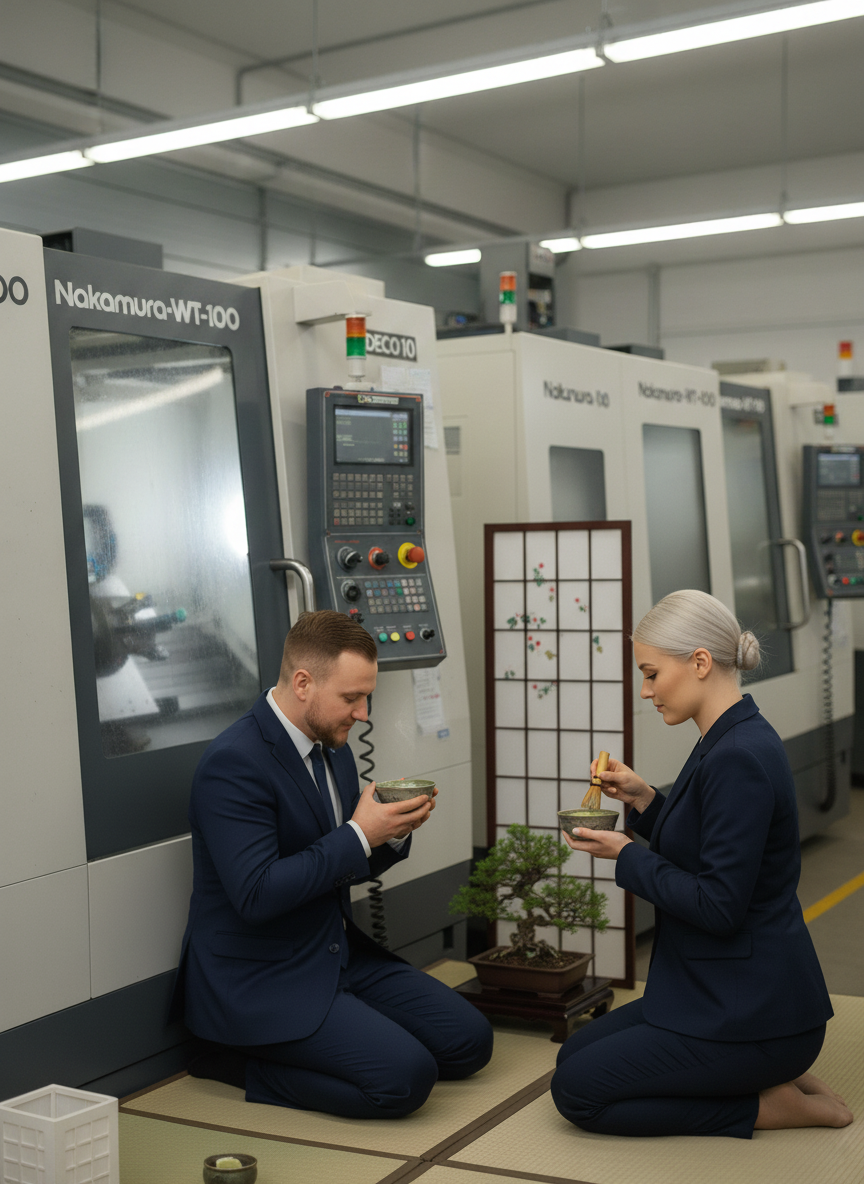
Over the years of working in mechanical production, I have come to understand one fundamental truth: no KPI, chart, or report can create lasting results if we manage processes but fail to manage people.
Studying “Eastern Management” by Professors So Chungwai and Su Dongshui, I found how deeply Eastern philosophy speaks to the real challenges of our workshops: scrap reduction, productivity, and team discipline — not through pressure, but through harmony, service, and respect.
🧭 Eastern Management: People Before KPIs
In many factories, we try to drive performance with dashboards and KPIs. Eastern management reminds us: numbers are only reflections of something deeper — how we see and treat people on the shop floor.
If we manage processes but neglect the human side, improvements will always be temporary. When we manage through people, processes begin to improve naturally.
🌿 1. Putting People First — The Human as a Subject, Not an Instrument
Eastern management sees every employee as a subject of management, not merely a resource. A machine operator is not just an “executor”, but an owner of the process.
When I embraced this mindset on the shop floor, the level of feedback skyrocketed — and improvement initiatives stopped being formal exercises. Mistakes turned into opportunities for growth instead of reasons for punishment.
Practical insight: “The problem is not in the person, but in the process we have not taught them to master correctly.”
⚖️ 2. Morality as Priority — Leading Through Moral Authority
In Eastern philosophy, a leader’s strength does not come from command, but from moral authority. A manager who consistently demonstrates professionalism, respect, and integrity has little need for authoritarian pressure — people follow naturally.
This transforms control into mutual trust, and motivation into an inner state of commitment rather than external fear.
How It Works in Practice
- Openly acknowledge your own mistakes as a leader.
- Systematically train and empower mentors on the shop floor.
- Record and publicly celebrate individual and team achievements.
🤝 3. Leadership Through Service — Creating Conditions for Others
Management grounded in service can be expressed in one simple sentence:
“I create the conditions that allow others to perform at their best.”
This is the philosophy of a leader who does not push from above, but leads from the front — removing obstacles, clarifying standards, and making sure people have the tools, training, and support they need.
How It Looks in a Manufacturing Workshop
- Removing administrative barriers so operators do not need “permission” to do the right thing.
- Building a culture where every manager is a coach, not an overseer.
- Measuring success not only by parts produced, but by process stability.
When operators feel respected as subjects, when leaders act with moral authority, and when management is understood as service, efficiency stops being a constant struggle — it becomes a natural state of order in the workshop.
🧩 4. The Ontology of Efficiency — “Harmony & Integration”
The authors describe a powerful concept — the Three Harmonies (3He):
- Unity — the team moves as one coherent whole.
- Integration — people, technology, and goals are aligned.
- Harmony — productivity and quality no longer stand in conflict.
This is exactly what we call a stable process: not maximum speed, but balanced performance without waste. When the system is in equilibrium, scrap decreases naturally — not through coercion, but through inner order.
⚙️ 5. Applying “Five Xing” to Today’s Workshop
Using the book’s “Five Xing” framework (five management practices), I adapted key steps for the production floor:
- Human orientation → recognise ownership and initiative in each operator.
- Psychology‑based management → lead tasks and emotions, not just instructions.
- Interpersonal connectedness → build peer‑to‑peer links: operator ↔ operator, not only top‑down.
- Strategic vision → think five steps ahead and manage the system, not just its parts.
- Talent development → grow your next team leader from within, not only from the job market.
🧠 The Takeaway: From Procedures to Philosophy
Western management has given us strong procedures. Eastern management offers a philosophy.
When we integrate both, we stop merely “managing” and start creating an environment where quality and efficiency emerge from inner order, shared responsibility, and respect for people.
For me, Eastern management is not abstract theory — it is a practical lens that changes how we react to mistakes, how we give feedback, and how we balance demands for results with care for people.
👉 If the principle “Putting People First” resonates with you,
which Eastern (or people‑first) ideas do you already apply in your production lines?
How do you turn efficiency from struggle into harmony?