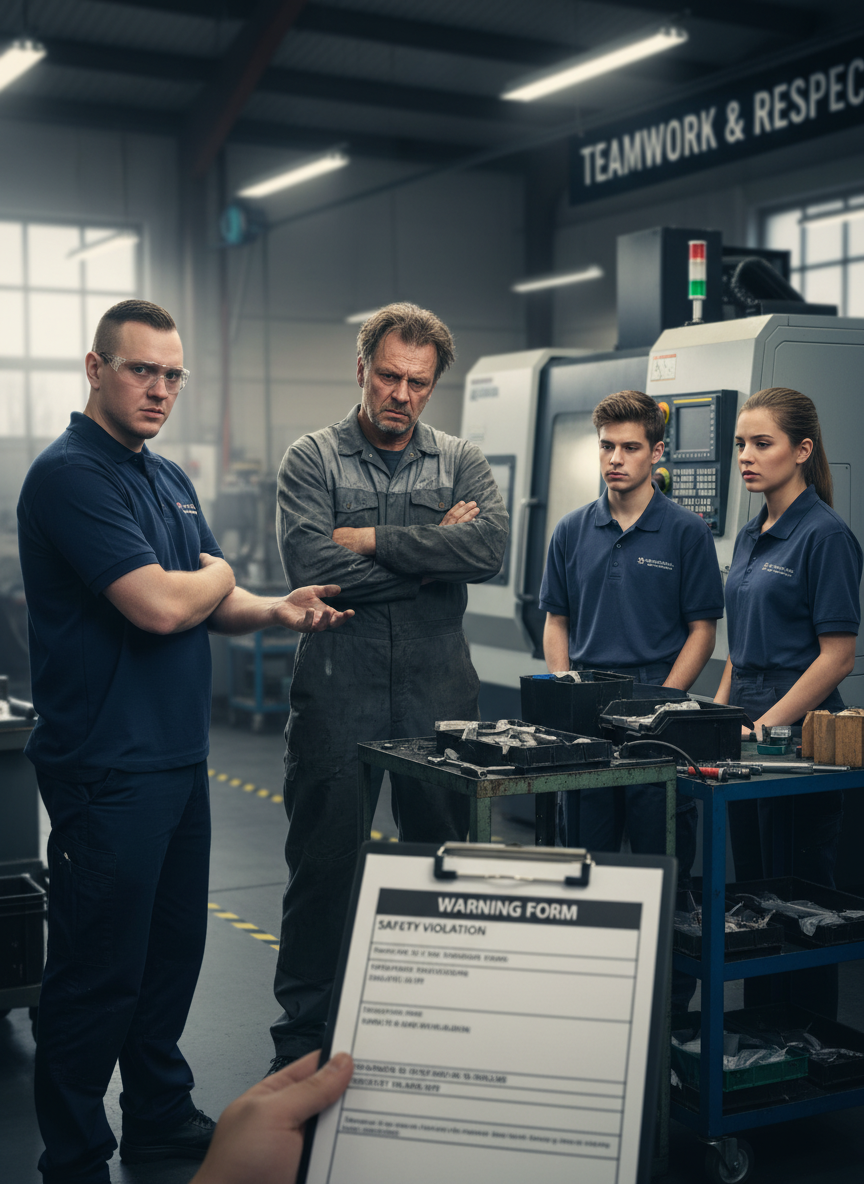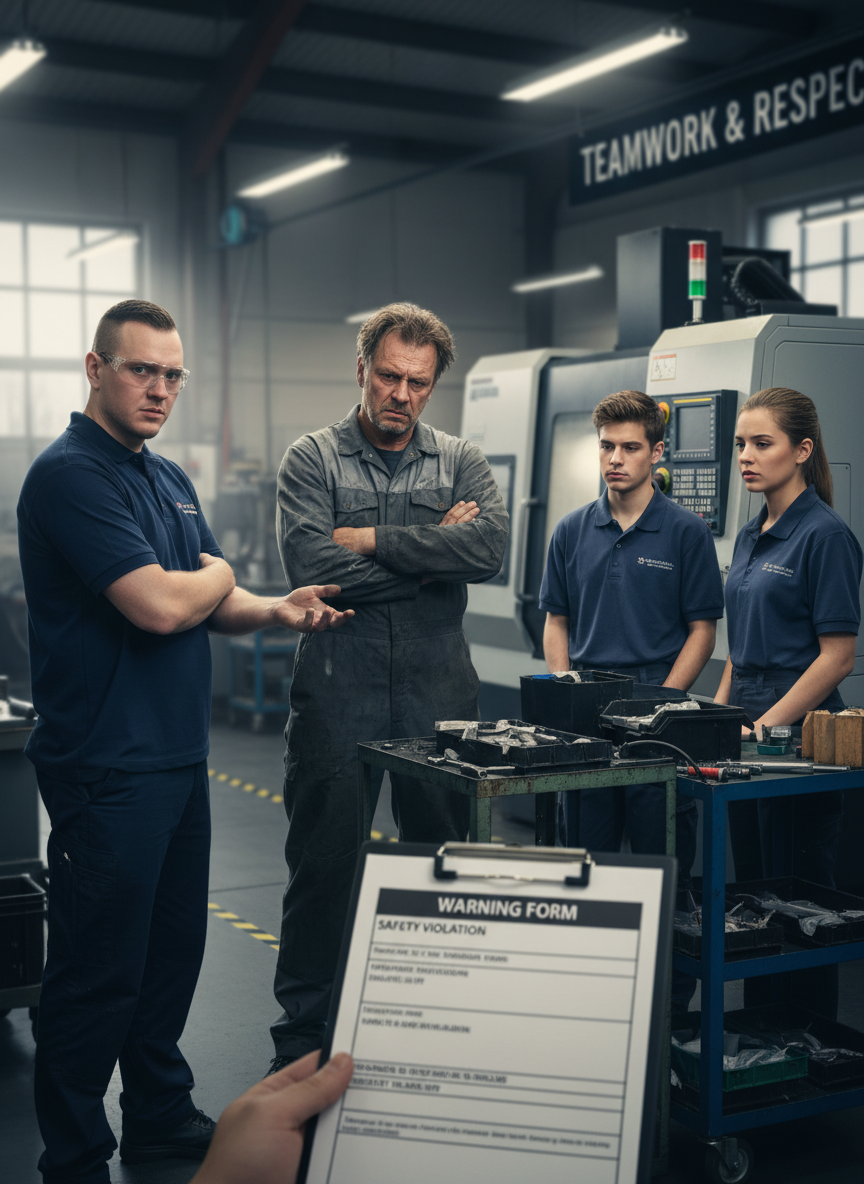
Imagine you have a Level 4 CNC machinist on your team who refuses to move between machines, struggles with complex setups and programming, repeatedly violates safety protocols, and fails to keep the workplace clean.
On top of that, he discourages new hires — telling supervisors they “don’t know anything” or “can’t handle the work.” But once those same newcomers are moved to another zone, they perform well. The accusations were never justified.
To make matters worse, this machinist spreads negativity about colleagues, and experienced operators openly refuse to work with him.
Why does this happen? In many cases, it is insecurity. When someone feels their own limitations are exposed, they may try to shift focus by discrediting others.
As a supervisor, my responsibility is not only to ensure productivity, but also to protect the team culture. Here is how I would handle it:
- Address accountability directly – Set clear expectations about safety, housekeeping, and professional conduct. Repeated violations cannot be ignored.
- Support growth, not sabotage – Offer training and coaching to help the machinist develop the missing skills. If someone has a Level 4 title, they must demonstrate Level 4 capability.
- Shield new hires from negativity – Pair them with mentors who elevate, not tear down. Early experiences shape how they view the shop and their career.
- Enforce fairness – Respect must go both ways. Team members who undermine colleagues harm not only morale but also productivity.
- Lead by example – Show the team that every machinist’s contribution is valued, but toxic behaviour will never be tolerated.
A leader’s job is not just to manage machines — it is to manage people in a way that builds trust, respect, and excellence. Because when the environment is healthy, even the toughest challenges turn into opportunities for growth.