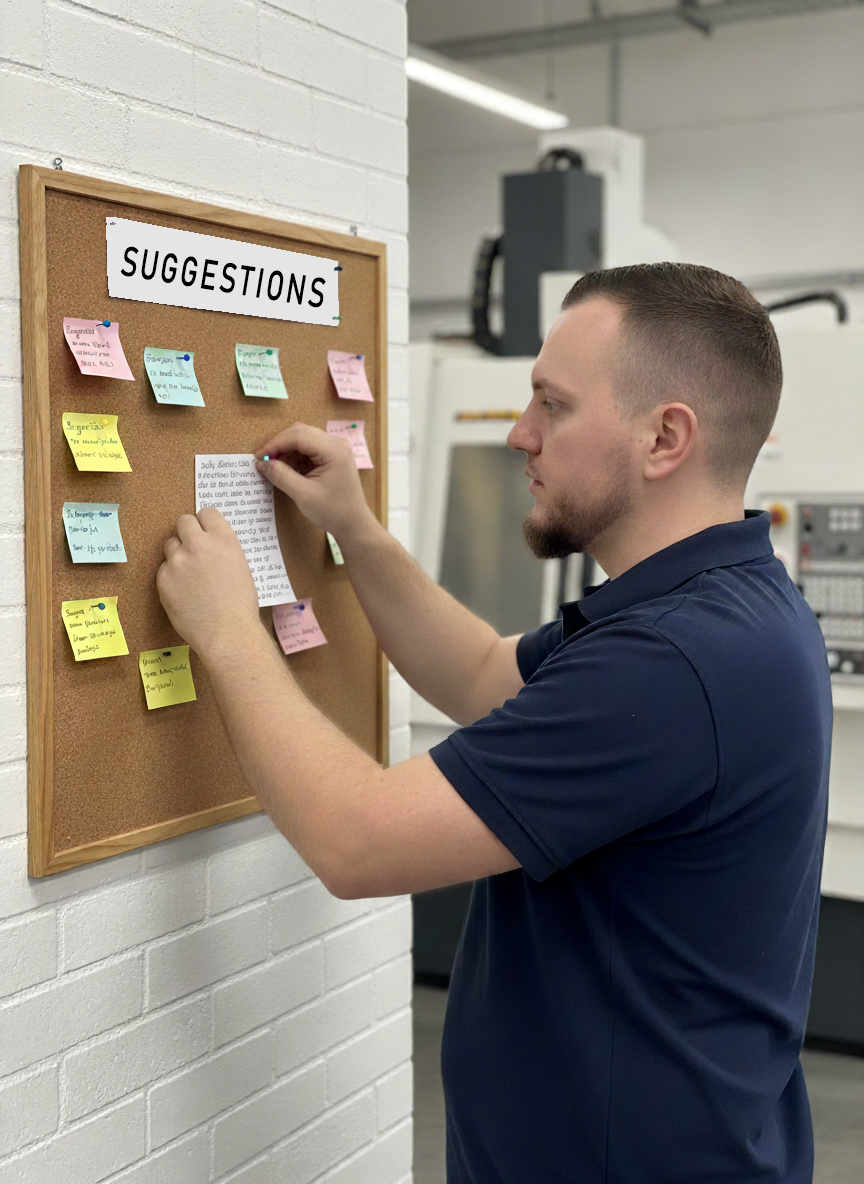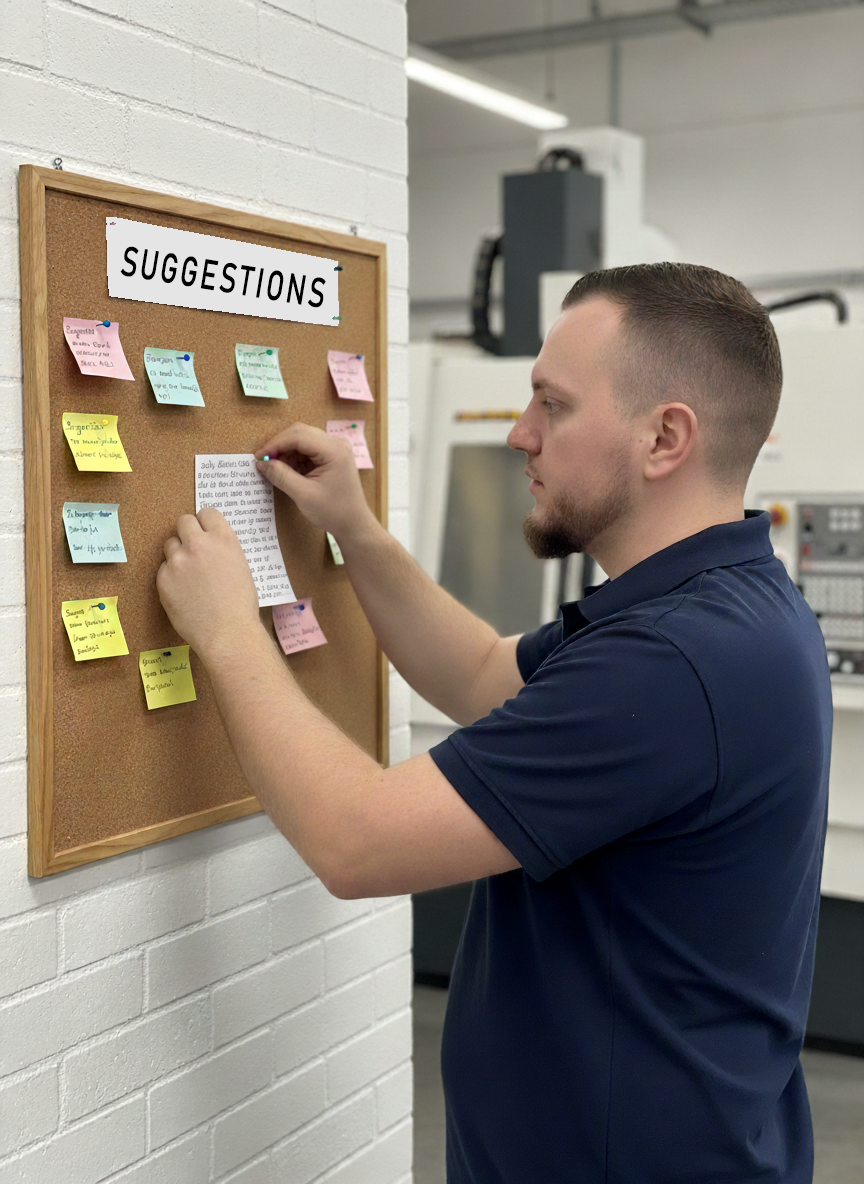
Imagine this: one day, a new manager steps in, gathers the team, and asks machinists to share ideas on how to improve the performance of the machine shop.
On the notice board, people post a variety of suggestions. But today, I want to share one more of mine.
2. Distribution of Productive Forces
It is essential to consider the skill level of machinists involved in complex tasks.
Machinists at Level 4 can make CNC settings, adjustments, and program edits. Their expertise is critical for setups and troubleshooting.
Machinists at Level 3 can run multiple machines and monitor the quality of produced parts, ensuring smooth operations and consistency.
By deliberately distributing tasks based on skill levels, the workload on Level 4 machinists is reduced. They can then dedicate themselves to setups and program adjustments more quickly and efficiently, instead of being overloaded with routine monitoring.
This division of labour unlocks the full potential of the team:
Level 4 operators focus on complex, high‑value work.
Level 3 operators run machines effectively while ensuring quality.
As a result, the machine shop efficiency ratio can increase by up to 200%. This improvement drives not only speed but also the quality of output, creating a stronger and more balanced workflow.
Suggestions for machine shop improving by Oleksandr Velyvchenko.
What I wanted to highlight with this proposal:
- A strategic, fair division of labour.
- Efficient use of competencies for higher productivity.
- The vision of a supervisor who looks at the whole system, not just single operations.
The outcomes this could bring:
- Faster setups and program corrections by skilled machinists.
- Higher productivity per shift without overloading individuals.
- Better quality through dedicated monitoring roles.
- A culture where every level of expertise is respected and put to its best use.
Suggestions like this do not just optimise workloads — they redefine how teams collaborate, respect skill, and achieve higher results together.