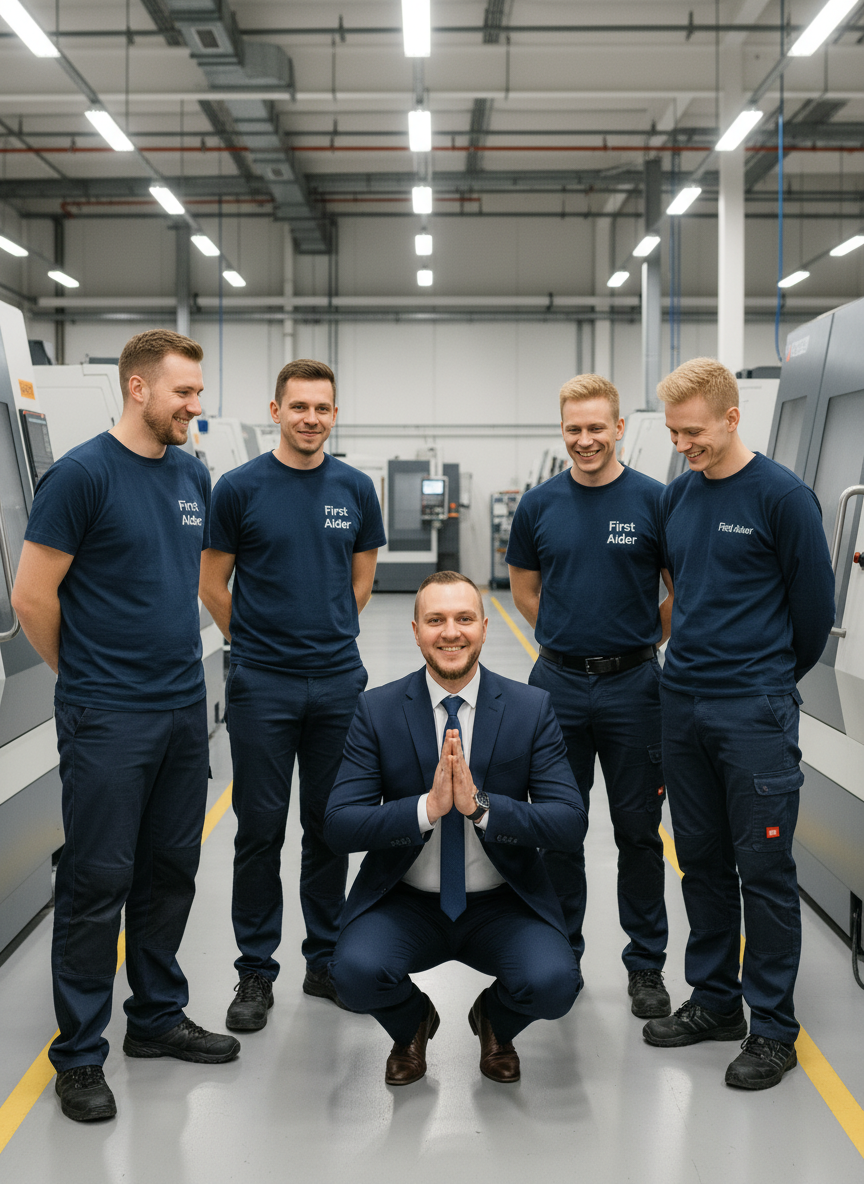
How do you view change within your organisation? Should leadership evolve? Should democracy and transparent decision‑making become part of industrial culture?
From my experience across factories and production networks in Europe, I have often seen a destructive pattern: power concentrated in a few hands, with managerial positions filled by allies rather than capable leaders. This creates a closed chain where every link protects the other. Such groups resist anyone who might expose the parasitic system — one that lives on money made at the expense of others.
This culture does not promote growth — it breeds imitation, “rulers and servants,” poor productivity, and a workforce stripped of motivation and future vision.
And what is the future of the working class? It is not only wages but dignity, motivation, and well‑being of those whose hands create the products that generate value. Without them, there is no production, no business, no future.
The greatest risk is allowing a parasitic model where some thrive on the labour of others without fairness. Every role matters, but we must never forget whose hands keep the shop alive.
The working class is the gold of manufacturing. They are the hands, the heart, and the mind of production. It is our duty as supervisors and managers to safeguard their well‑being.
A manager’s salary is not just a budget item — it is the gratitude of those who keep machines running and customers satisfied.
Imagine a shop where a supervisor truly cares about the machinist who spends long hours by the spindle, adjusting programs and holding tolerances. Imagine leadership that offers not only direction but also respect and trust.
Breaking such chains is difficult. Yet democratic practices — transparency, fair evaluation, and open communication — can weaken toxic structures. This prevents parasitism from being passed down and builds healthier, fairer, and more productive organisations.
When workers feel seen, valued, and supported, they give more than labour. They bring pride, loyalty, and energy. This is not charity — it is strategy.
Excellence is not built on fear or rigid hierarchy. It grows from fairness, respect, and leadership that understands:
- Without the worker, there is no factory.
- Without the machinist, there is no product.
- Without people, there is no future.
The mission of a true leader is not power, but service — building a system where every person feels needed and proud of their contribution. That is the path to sustainable success.